

On August 3–15 and 23 the University of Tartu had archaeological rescue excavations on the Iron Age, medieval and post-medieval cemetery of Rautina Niklusmägi. The hill got its name from the chapel of St. Nicholas that stood there in Catholic times. The site is located in Valgamaa county, Karula parish and community, ca. 5 km north-east of Valga town and ca. 4 km north of the Estonian-Latvian border. The monument was strongly damaged by treasure hunters who had used heavy techniques to disturb the soil, in order to facilitate the use of metal detectors for finding archaeological objects. Some of the cemetery soil had been removed by tractor, to look for artifacts in a safer place. The systematic plundering of the site had occurred during several years and ended in late 2010 or early 2011.
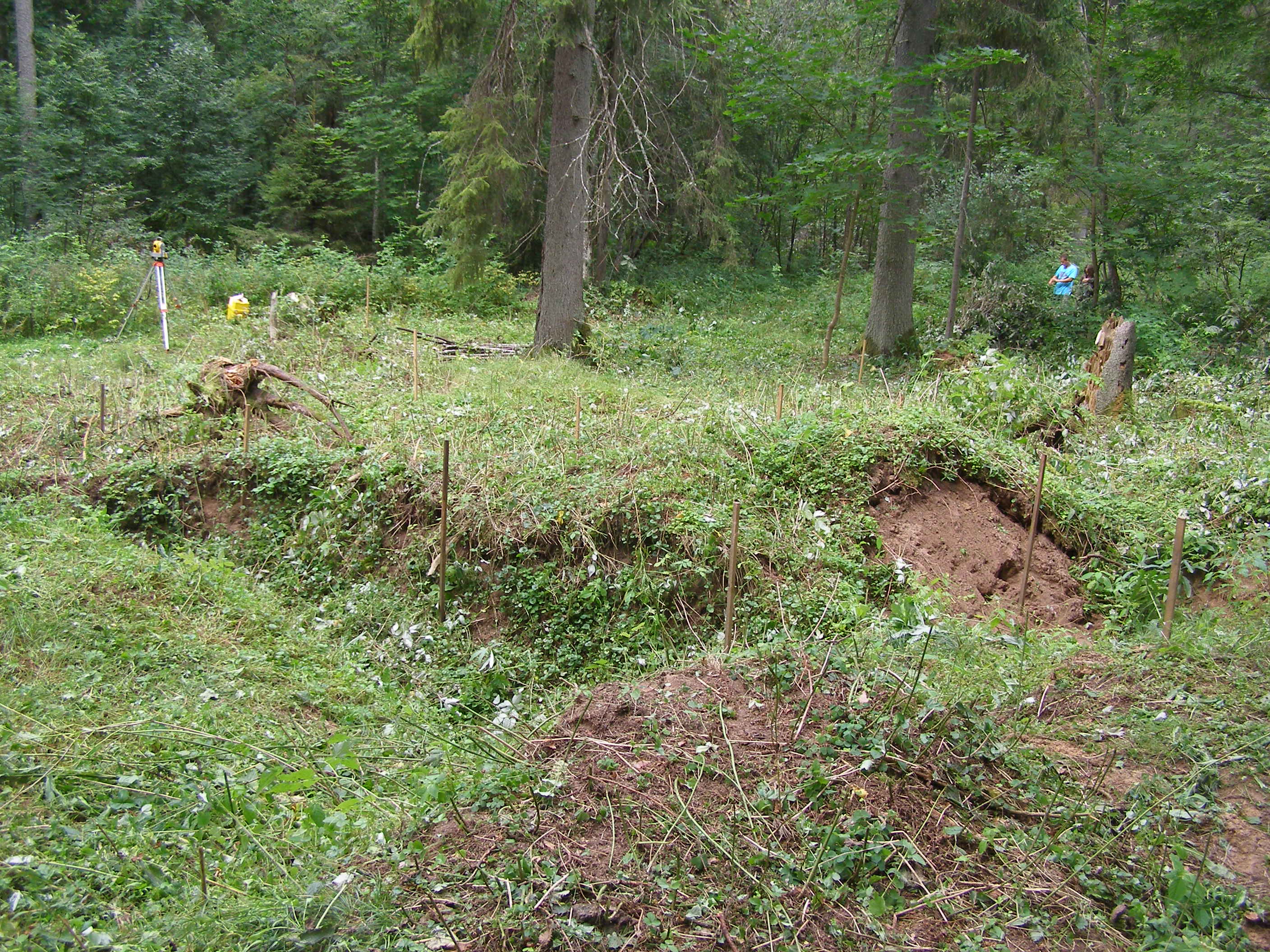
Before the excavations
The site turned out to be more damaged than it seemed before: the core area of the cemetery, over 400 sq. m, had totally been disturbed and most archaeological bronze and silver objects had systematically been removed from the soil by using metal detectors. In the course of excavations mostly iron artifacts (coffin nails, knives, needles, belt buckles, belt rings), glass beads, pottery and textile fragments – objects of no interest for the plunderers – were found. However, also several medieval and post-medieval coins and small fragments of bronze items were unearthed. Of great interest were remains of woolen textiles, decorated with bronze spirals, bronze and tin clips, originating from the graves of the 13th century. Such finds, characteristic for eastern Latvia, have been found in Estonia numerously only in Siksälä Cemetery close to the Latvian border in the south-easternmost corner of the country. Excavations revealed also a few traces of the Catholic chapel – small pieces of lime mortar, burnt nails and fragments of window glass, some of them melted in big heat. A huge number of cremated bones and some burnt stones showed that the medieval village cemetery was preceded by an Iron Age cremation cemetery, unfortunately totally destroyed by plunderers. From a small trial trench at the edge of the totally disturbed area over 10 burials, mainly from the 15th century, were found. The graves, mostly with their heads towards the west, but also some east-oriented burials, were furnished with coins, needles, knives and brooches.
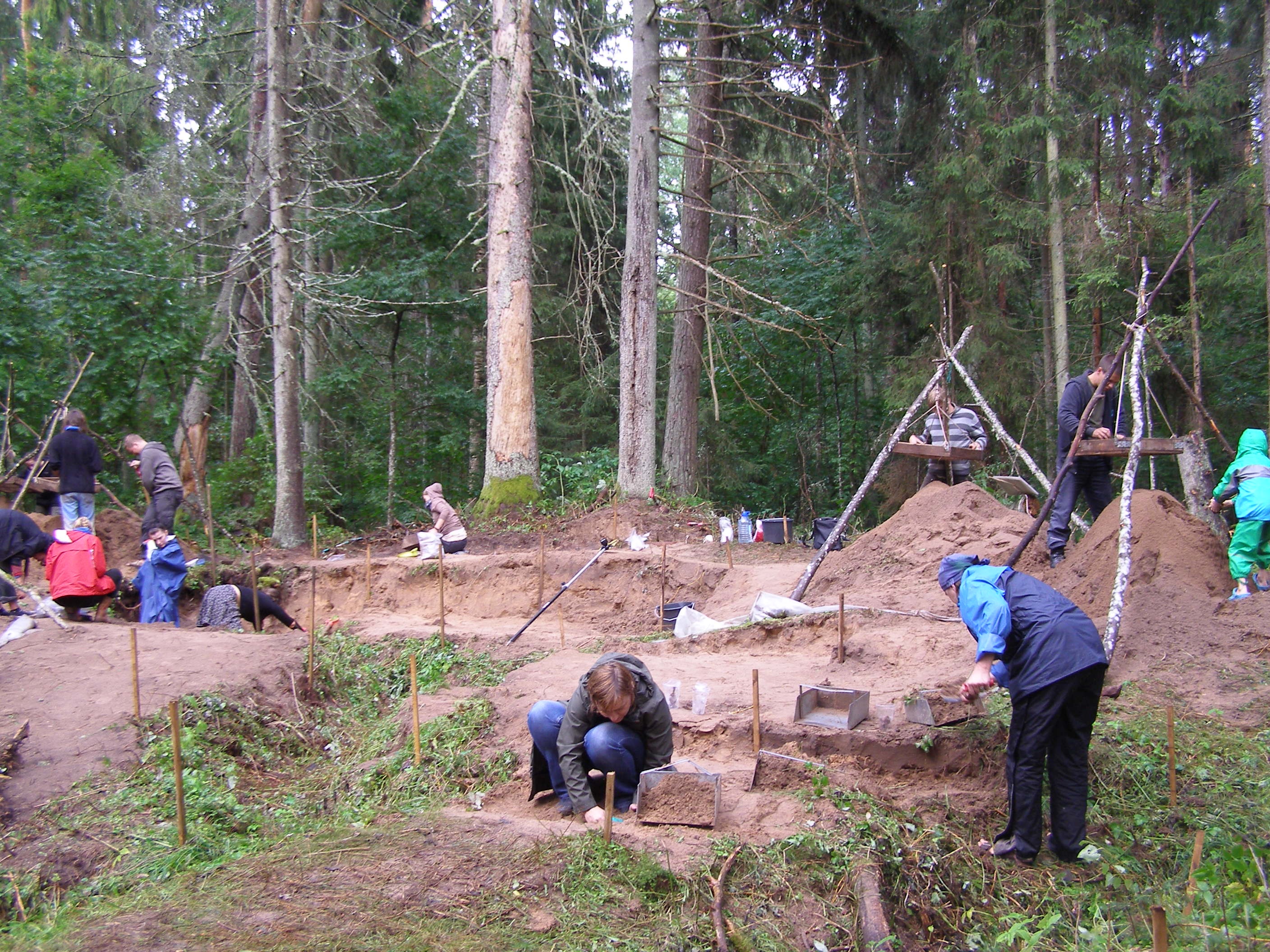
Ecxavations
In the end of the works the surface of the damaged part of the cemetery was smoothed with bulldozer and the trenches and pits dug by treasure hunters were closed. The finds will be conserved at the archaeological laboratory of the University of Tartu.